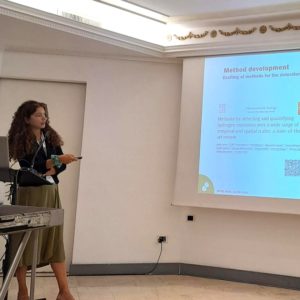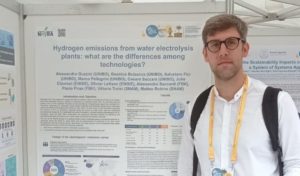
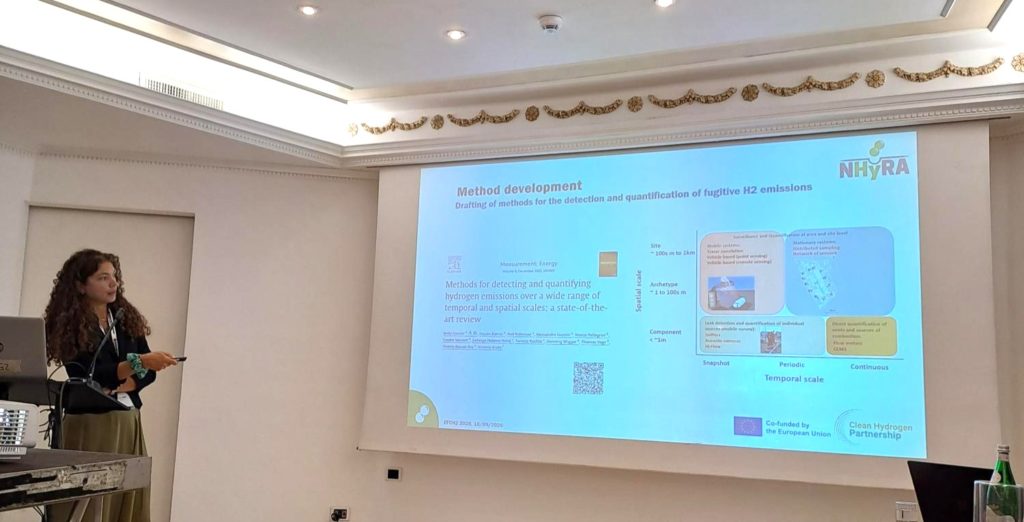
NHyRA showcased its work to improve understanding of hydrogen releases at the European Fuel Cells and Hydrogen Conference 2026 (𝗘𝗙𝗖𝗛₂ 2026) in Capri, Italy, on September 16. Vittoria Troisi, Research & Development Specialist at SNAM and NHyRA coordinator, presented the H2 release inventory and the validation of methods for detecting and quantifying hydrogen releases.
The first part of the presentation focused on the hydrogen release inventory: a database that distinguishes between different types of releases, such as leaks, venting and releases associated with incomplete combustion. It also records information such as release frequency, gas composition, available emission data, and the conditions under which measurements were made.
NHyRA then offered a review on the development of methodologies for detecting and quantifying hydrogen releases. The project has used sniffers and passive detectors, acoustic cameras, bubble screening and high-flow sampling to locate leaks and provide estimations of how much hydrogen is being released. Testing these technologies is divided into three stages: laboratory testing, controlled releases and testing in real operating environments.
Finally, the project outlined the results from a series of surveys filled out by manufacturer-experts about potential H2 sources. The survey collected information on the specific origin of those H₂ emissions, and the mitigation measures already implemented or considered by technology developers. You can find more information about the results of the survey by clicking this link.
Regarding the project’s next steps, NHyRA will deliver validated methodologies, emission scenarios and recommendations to support the sustainable, large-scale deployment of the hydrogen economy. The project is creating the foundation for future standardisation activities, supporting reliable H₂ emissions assessment and potential mitigation strategies.