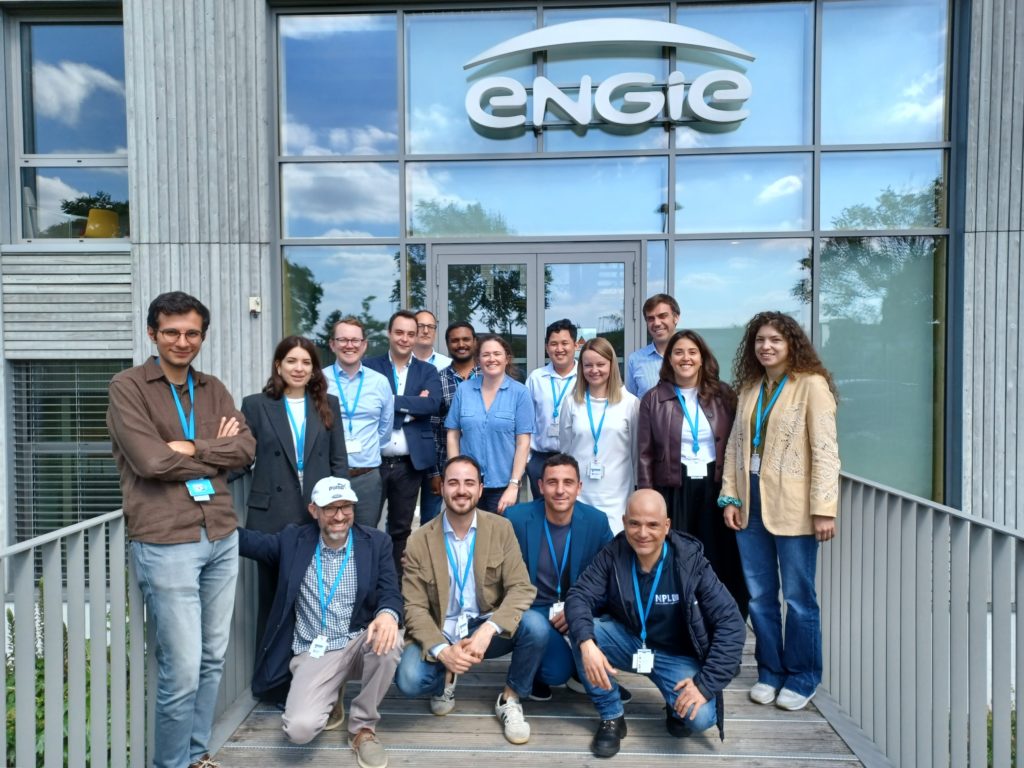
On May 21 and 22, NHyRA held its third consortium meeting at the facilities of NHyRA partner ENGIE Lab CRIGEN in Paris, France. The project partners provided updates on their activities and toured the ENGIE facilities to gain a firsthand look at the work being done there.
The meeting began with an introduction by Snam as NHyRA project coordinator. Next, INIG explained the work carried out in WP2, outlining the final release of a set of standards and procedures for detecting and quantifying H2 emissions and the correlation methods for H2 release estimates.
Afterwards, it was time for WP3, presented by the NPL Team. In this case, the presentation focused on reporting the performance of hydrogen leak detection and release quantification methods and presenting the current status of the field tests.
During the afternoon session, Snam presented WP7 to update details of project coordination. Beyond internal aspects, it was noted that the public deliverables are now available on the Zenodo repository and the NHyRA website.
European Gas Research Group (GERG) presented the progress made on the NHyRA’s clustering tasks. The presentation outlined the progress achieved in publishing papers and the steps to be taken to develop the exploitation strategy.
The second day of meetings began with a presentation by University of Bologna, on the activities of WP1, which aims to develop an inventory of hydrogen emissions across its value chain. Currently, the tasks related to this objective focus on expanding the inventory to include experimental data on fugitive emissions and data from other EU-funded projects.
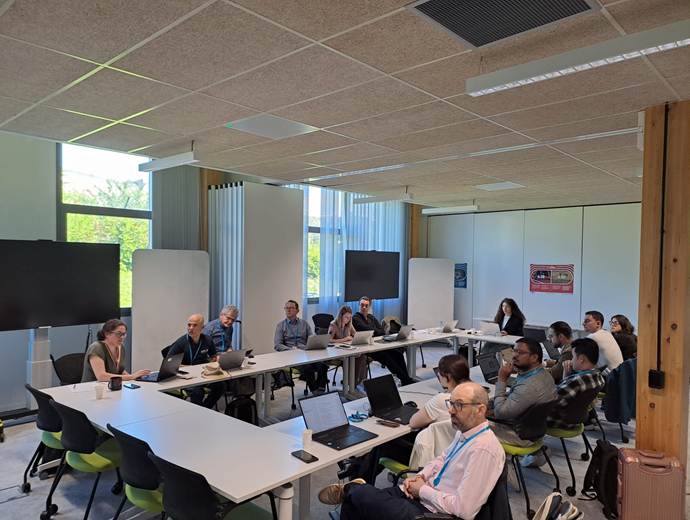
The next presentation (regarding WP4) was held by ENGIE and Fondazione Bruno Kessler (FBK) and analysed progress in upscaling emission data from measurements and in identifying potential mitigation strategies. The partners involved in those tasks presented the progress made in modelling H2 releases from the hydrogen value chain, analysing the impact of mitigation strategies at the process level, and the benefits of mitigation measures assessed at the value chain level.
The last part of the meeting covered the updates on WP5, which analyses the future scenarios on the European H2 economy. FBK showcased the forecasts related to the use and penetration of hydrogen in Europe’s economy by 2030 and 2050. Then, the Italian National Agency for New Technologies, Energy and Sustainable Economic Development (ENEA) outlined the progress on providing quantitative values of H2 release in the future European H2 economy and the current status of alliances with similar goal projects to coordinate information exchange.
In addition to the meetings, the NHyRA partners visited the facilities of the ENGIE Lab CRIGEN, a cross-functional centre of expertise dedicated to green gases and new energy uses in cities, buildings, and industries. In this case, the partners visited the H2 factory.